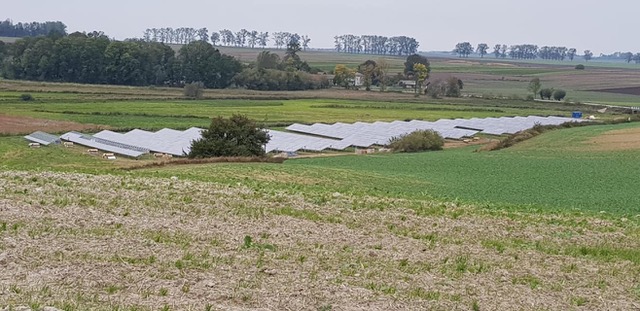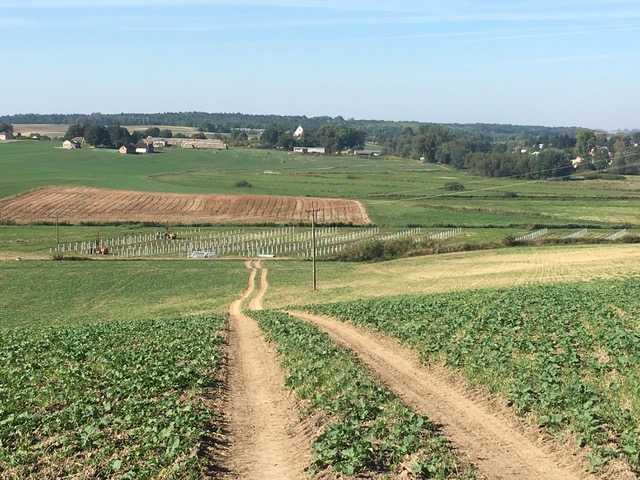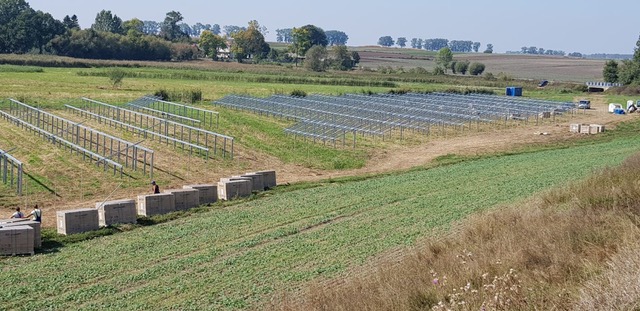
A solar farm is a multi-stage investment that may take from several months to more than two years. The following overview reflects the process behind our projects in Liwcze.
1. Site analysis and feasibility
The first step is to assess irradiation, terrain, grid distance, planning status and environmental constraints. A feasibility study then estimates annual production, construction cost and the expected economics of the project.
2. Administrative decisions and permits
Planning approval, environmental decisions and grid connection terms are often the longest part of the process. These procedures should begin early and run in parallel with technical planning.
3. Technical design and contractor selection
The design defines module layout, DC and AC cabling, inverters, the transformer station, monitoring, fencing and site access. Contractors should be evaluated on relevant experience and verified references.
4. Civil works and foundations
Construction usually begins with driven steel piles, followed by internal roads and cable routes. The method limits soil disturbance and enables efficient assembly.
5. Structures, modules and electrical installation
Mounting rails and modules are installed in rows. DC cabling connects the modules to inverters, which convert current for delivery through a transformer to the distribution grid.
6. Commissioning and operation
After technical acceptance and the required commercial agreements, the farm begins production. A SCADA system monitors output and equipment around the clock, supported by inspections, vegetation management and periodic cleaning.